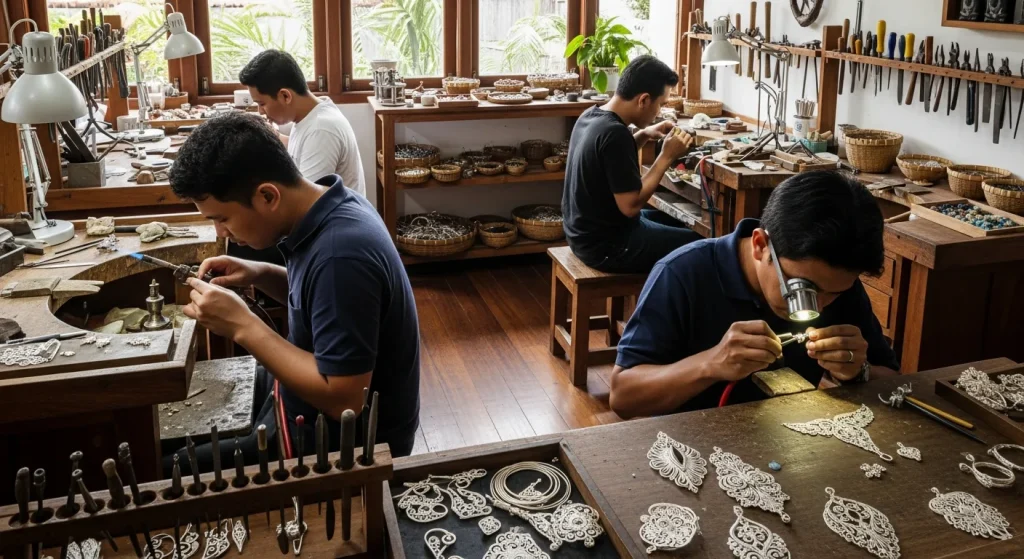
The global sterling silver jewelry market is projected to reach USD 27.23 billion by 2035, growing at a CAGR of 5.4% from 2026. Asia-Pacific leads global consumption, with Indonesia, particularly Bali, recognised for its artisanal, heritage-based sterling silver craftsmanship. This segment, though niche, aligns with regional growth trends.
As senior content lead for Bali Silver Jewelry Wholesale, I provide this guide for importers, wholesalers, retailers, interior contractors, and trade buyers. This briefing focuses on the 2026–2027 period, offering insights into market dynamics and key designs for the upcoming retail cycle.
Market Overview: Global and Regional Silver Jewelry Trends
The global silver jewelry market is experiencing substantial growth. Valued at USD 43.76 billion in 2026, it is projected to reach USD 65.43 billion by 2035, indicating a Compound Annual Growth Rate (CAGR) of approximately 4.6% from 2026 to 2035. Silver jewelry fabrication exceeded 240 million ounces in 2023 and is anticipated to reach around 248.6 million ounces by 2026, representing the highest demand observed in over a decade.
Geographically, Asia-Pacific dominates consumption, accounting for over 40% of the global market. This is followed by North America at approximately 38% and Europe at around 20%. This regional distribution underscores the importance of Asian markets for silver jewelry exporters.
Sterling Silver (925) Segment Performance
The sterling silver jewelry segment, specifically 925 purity, is a significant component of the overall market. It was valued at USD 16.09 billion in 2025 and is projected to reach USD 16.96 billion in 2026. Forecasts indicate continued robust growth, with the segment expected to reach USD 27.23 billion by 2035, demonstrating a CAGR of 5.4% from 2026 to 2035. This higher growth rate compared to the general silver jewelry market highlights sterling silver’s increasing appeal.
Indonesia and Bali’s Position in the Global Market
Indonesia’s sterling silver jewelry market is characterised by its emphasis on cultural craftsmanship and heritage-based motifs. Bali and Yogyakarta are the primary artisanal centres for silver production. The country’s tourist economy significantly contributes to demand, with handcrafted sterling silver jewelry popular as souvenirs and cultural collectibles. Concurrently, urban youth are increasingly purchasing affordable fashion silver jewelry.
Indonesia’s strength lies in its handmade, artisanal export niche, particularly in Bali, rather than large-scale industrial manufacturing. While concrete country-level market size data for Indonesia/Bali is not separately detailed in global reports, its status as an artisanal hub within Asia-Pacific, coupled with the region’s strong demand growth, positions Bali’s wholesale export segment as small but high-margin and growing in line with Asia-Pacific’s greater than 4% annual demand growth.
2027 note: Retailers should anticipate continued strong consumer preference for handcrafted pieces that tell a story or feature unique cultural elements, aligning with Bali’s specialisation in this area.
Top 10 Sterling Silver Designs for Retailers (2026-2027)
Based on current market trends and Bali’s artisanal strengths, the following designs are projected to perform well for retailers in 2026 and 2027. These categories reflect consumer preferences for craftsmanship, cultural significance, and versatility.
- Filigree Work: Intricate wirework, a hallmark of Balinese silversmithing, remains popular. Designs featuring delicate patterns in earrings, pendants, and rings appeal to customers seeking detailed craftsmanship.
- Granulation Techniques: Small spheres of silver meticulously applied to surfaces create textured, antique-inspired pieces. This technique is particularly effective in larger statement rings and cuffs.
- Traditional Balinese Motifs: Designs incorporating elements such as the ‘Garuda’, ‘Barong’, or ‘Frangipani’ flower maintain their appeal, offering cultural authenticity. These are often seen in pendants, brooches, and men’s jewelry.
- Oxidised Silver with Polished Accents: The contrast between dark, oxidised silver and bright, polished sections enhances detail and gives depth to designs. This finish is versatile for both contemporary and traditional styles.
- Gemstone Inlay: Sterling silver pieces featuring inlays of natural stones such as mother-of-pearl, abalone, or turquoise. These add colour and organic texture, often in geometric or abstract patterns.
- Minaudière-Inspired Pieces: Small, decorative boxes or charms crafted from sterling silver, often with intricate detailing and sometimes incorporating small, functional elements. These serve as unique pendants or keychains.
- Woven Silver Designs: Techniques that mimic textile weaving using silver wire or strips, creating flexible and visually interesting bracelets, necklaces, and rings.
- Abstract Organic Forms: Sculptural pieces inspired by natural shapes—leaves, waves, or abstract botanical elements—but rendered in a contemporary, minimalist style.
- Stackable Rings and Bracelets: Slim, versatile sterling silver rings and bangles designed to be worn in multiples. These often feature simple textures, small gemstone accents, or subtle Balinese carvings.
- Men’s Sterling Silver Jewelry: Robust designs including heavy chains, signet rings with carved motifs, and leather bracelets with sterling silver clasps or accents. Demand for men’s jewelry continues to grow.
Wholesale Considerations for Trade Buyers
When sourcing Bali sterling silver jewelry wholesale, trade buyers should consider several factors to ensure product quality and market relevance:
Quality Assurance
- Material Purity: Ensure all items are certified 925 sterling silver. Reputable wholesalers provide clear documentation.
- Craftsmanship: Evaluate the finishing, stone settings, and overall construction. Hand-finished pieces should exhibit attention to detail without rough edges or imperfections.
- Durability: Assess the strength of clasps, links, and ring bands to ensure longevity for retail customers.
Design Versatility and Appeal
- Market Trends: Select designs that align with current fashion trends while retaining timeless appeal.
- Customer Demographics: Consider the target audience for your retail operations. Bali offers a range from traditional to contemporary.
- Collection Cohesion: Curate collections that offer a consistent aesthetic or narrative, allowing customers to build complementary sets.
Logistics and Supply Chain
Understanding the supply chain from Bali is critical for efficient wholesale operations. This includes production timelines, shipping methods, and customs procedures.
| Aspect | Consideration for Bali Silver Jewelry Wholesale |
|---|---|
| Production Lead Time | Custom orders typically require 4-8 weeks, depending on complexity and volume. Stock items may be available for immediate dispatch or within 1-2 weeks. |
| Minimum Order Quantity (MOQ) | Varies by wholesaler; common MOQs range from 5-10 pieces per design for custom orders, lower for existing stock. |
| Shipping Methods | Air freight (e.g., FedEx, DHL) for faster delivery (3-7 days), sea freight for larger, less urgent orders (3-6 weeks). |
| Customs & Duties | Buyers are responsible for import duties and taxes in their respective countries. Ensure clear harmonised system (HS) codes are provided. |
| Packaging | Wholesale packaging typically involves bulk packing; retail-ready packaging may incur additional costs and lead time. |
The global and sterling silver jewelry markets present clear growth opportunities into 2027. Bali’s artisanal craftsmanship offers a distinct value proposition for trade buyers seeking high-quality, culturally rich sterling silver jewelry. By focusing on established techniques and understanding market dynamics, retailers can effectively meet consumer demand. For further enquiries or to discuss specific wholesale requirements, request a wholesale quote on WhatsApp.