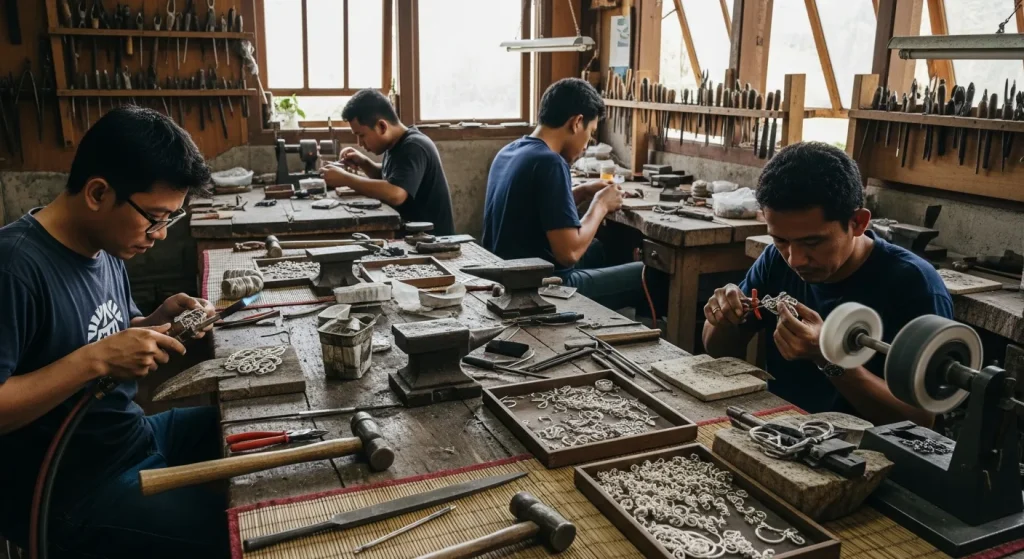
The global silver jewelry market is projected to reach USD 43.76 billion in 2026, growing to USD 65.43 billion by 2035 with a CAGR of approximately 4.6%. Asia-Pacific leads consumption, accounting for over 40% of the market. Bali’s artisanal silver jewelry wholesale sector, focused on cultural craftsmanship, is a small but growing export niche within this expansion.
Bali Silver Jewelry Wholesale Pricing Trends 2027: What to Expect for Earrings, Rings, and Necklaces
As a Celuk master silversmith and senior content lead for Bali Silver Jewelry Wholesale, I provide this briefing for importers, wholesalers, retailers, interior contractors, and trade buyers. This analysis focuses on the 2026–2027 period, detailing market dynamics relevant to wholesale pricing for artisanal Bali silver jewelry, including earrings, rings, and necklaces.
Global Silver Jewelry Market Overview (2026–2027)
The global silver jewelry market is experiencing significant expansion. In 2026, the market value is projected at USD 43.76 billion, with forecasts indicating a rise to USD 65.43 billion by 2035. This represents a Compound Annual Growth Rate (CAGR) of approximately 4.6% from 2026 to 2035. Global silver jewelry fabrication exceeded 240 million ounces in 2023, with an estimated 248.6 million ounces by 2026, marking the highest demand in over a decade.
Geographically, Asia-Pacific is the largest consumer, accounting for over 40% of global silver jewelry consumption. This region surpasses North America, which holds approximately 38%, and Europe, at about 20%.
Sterling Silver (925) Segment Performance
The sterling silver jewelry segment, crucial for Bali’s artisanal exports, is valued at USD 16.09 billion in 2025 and is projected to reach USD 16.96 billion in 2026. This segment is expected to expand further, reaching USD 27.23 billion by 2035, demonstrating a CAGR of 5.4% from 2026 to 2035. This growth rate exceeds the overall silver jewelry market, indicating strong demand for 925 sterling silver products.
Indonesia and Bali’s Position in the Global Market (2026)
Indonesia’s sterling silver jewelry market distinguishes itself through an emphasis on cultural craftsmanship and heritage-based motifs. Bali and Yogyakarta are the primary artisanal centers. The country’s tourist economy generates substantial demand for handcrafted sterling silver jewelry, serving as souvenirs and cultural collectibles. Concurrently, urban youth increasingly purchase affordable fashion silver jewelry.
Large-scale industrial manufacturing is not Indonesia’s primary strength in this sector. Instead, the country excels in its handmade, artisanal export niche, with Bali being particularly prominent. While concrete country-level market size data for Indonesia/Bali alone are not explicitly broken out in cited reports, Indonesia’s status as an artisanal hub within Asia-Pacific, combined with the dominance of global players in mass production, suggests Bali’s wholesale export segment is small but high-margin and expanding in line with Asia-Pacific’s greater than 4% annual demand growth.
Factors Influencing Bali Artisanal Silver Jewelry Wholesale Pricing
Several factors will influence wholesale pricing for Bali artisanal silver jewelry, including earrings, rings, and necklaces, into 2027:
- Raw Material Costs: Fluctuations in global silver prices directly impact production costs. While market growth is strong, raw material volatility can lead to price adjustments.
- Artisanal Labor Costs: The skilled craftsmanship inherent in Bali silver jewelry commands specific labor costs. As demand for unique, handcrafted items grows, the value of this specialized labor is maintained.
- Design Complexity: Intricate designs and detailed filigree work, characteristic of Balinese craftsmanship, require more time and skill, influencing the final wholesale price.
- Market Demand: The robust growth in Asia-Pacific and the global sterling silver segment supports consistent demand for Bali’s artisanal products, potentially allowing for stable or incrementally increasing pricing in response to market strength.
- Logistics and Export Costs: Shipping, insurance, and export regulations contribute to the final wholesale price. Efficiency in these areas can help manage costs.
2027 Note on Sterling Silver Demand
By 2027, the sterling silver jewelry segment is projected to continue its strong growth trajectory, driven by increasing consumer preference for durable and aesthetically appealing silver products. This sustained demand is expected to support stable wholesale pricing for Bali artisanal silver jewelry, particularly for well-crafted earrings, rings, and necklaces that align with current fashion and cultural trends.
Wholesale Pricing for Earrings, Rings, and Necklaces
The pricing structure for Bali artisanal silver jewelry varies based on design, silver weight, and craftsmanship. Below is a general overview of factors affecting pricing for key product categories:
Earrings
Bali silver earrings range from simple stud designs to elaborate chandelier styles. Factors influencing wholesale price include:
- Silver Weight: Heavier, more substantial earrings will naturally have a higher material cost.
- Design Detail: Intricate wirework, granulation, or stone settings increase production time and skill requirements.
- Stone Inclusion: The type, size, and quality of any semi-precious stones used will impact pricing.
Rings
Rings, from minimalist bands to ornate statement pieces, are a staple of Bali silver jewelry. Key pricing determinants are:
- Band Width and Thickness: Broader or thicker bands use more silver.
- Gemstone Embellishment: Rings often feature significant stone settings, which can be a primary cost driver.
- Filigree and Engraving: Detailed surface work adds to the artisanal value and cost.
Necklaces
Bali silver necklaces encompass pendants, chains, and elaborate collar designs. Wholesale pricing considerations include:
- Chain Length and Style: Longer or more complex chains (e.g., handcrafted links) increase silver usage and labor.
- Pendant Size and Intricacy: The main focal point of a necklace, pendants with detailed designs or large stones, will significantly affect the price.
- Closure Mechanism: Handcrafted or specialized clasps can add to the overall cost.
The market’s emphasis on cultural craftsmanship means that the unique artistry embedded in each piece contributes significantly to its value, ensuring that wholesale pricing reflects both material costs and the skill involved.
Outlook for Bali Artisanal Silver Jewelry Wholesale into 2027
The outlook for Bali artisanal silver jewelry wholesale remains positive. The sustained global growth in the silver jewelry market, particularly the sterling silver segment, provides a robust foundation. Bali’s distinct focus on handcrafted, culturally rich designs positions it favorably within this expanding market. Importers and wholesalers can anticipate consistent demand for high-quality, authentic Balinese silver pieces, with pricing reflecting the value of artisanal labor and the inherent quality of 925 sterling silver.
As a key player in this specialized export niche, Bali Silver Jewelry Wholesale is well-positioned to meet the demands of international trade buyers seeking authentic, high-quality artisanal silver jewelry.
2. Raw Material Costs and Supply Chain Dynamics
The cost of raw silver significantly influences wholesale jewelry pricing. Global silver prices have historically exhibited volatility, driven by industrial demand, investment sentiment, and geopolitical factors. For 2026–2027, the trajectory of silver prices will be a primary determinant for input costs in Bali’s silver jewelry sector. Forecasts suggest continued strong demand for silver across various applications, including industrial uses and investment, which may exert upward pressure on prices. However, supply stability from major producing nations will also play a role in moderating extreme fluctuations.
Bali’s silver jewelry industry, while artisanal, is integrated into global supply chains for raw silver. Most sterling silver (925 purity) used in Bali is imported, primarily from major refiners and suppliers. This reliance on imported raw materials means that currency exchange rates, particularly against the US Dollar, directly impact the landed cost of silver for Balinese workshops. A stronger Indonesian Rupiah can mitigate some import costs, while a weaker Rupiah increases them. Logistical costs for importing raw silver and exporting finished jewelry also contribute to the overall supply chain dynamics, with freight and insurance costs subject to global economic conditions.
Key factors affecting raw material costs and supply for 2026–2027:
- Global silver spot price movements.
- USD/IDR exchange rate fluctuations.
- Shipping and logistics costs for inbound raw materials and outbound finished goods.
- Availability and pricing of secondary materials such as gemstones and packaging.
3. Design Trends and Consumer Preferences
Bali’s silver jewelry is distinguished by its strong emphasis on cultural craftsmanship and heritage-based motifs. For 2026–2027, these foundational elements are expected to remain central to design aesthetics, catering to a global market that values authenticity and artisanal quality. Traditional Balinese designs, often inspired by nature, Hindu mythology, and local patterns, continue to be popular. However, there is an observable trend towards incorporating these traditional elements into more contemporary and minimalist forms, appealing to a broader international clientele.
Consumer preferences are shifting towards ethically sourced and sustainable products. While specific certifications for Bali’s silver jewelry are not universally mandated, buyers increasingly inquire about the origin of materials and the ethical practices employed in production. This trend influences design choices, with a preference for durable, timeless pieces over fast fashion items. The rising demand for sterling silver (925) jewelry, particularly within the 5.4% CAGR segment, indicates a preference for quality and longevity. Designs incorporating natural elements, such as semi-precious stones and organic shapes, are gaining traction, aligning with a broader consumer movement towards nature-inspired aesthetics.
Anticipated design and preference trends for 2026–2027:
| Trend Category | Specifics |
|---|---|
| Design Style | Fusion of traditional Balinese motifs with contemporary minimalism. |
| Material Focus | Continued strong demand for 925 sterling silver; incorporation of ethically sourced semi-precious stones. |
| Consumer Values | Emphasis on authenticity, craftsmanship, ethical production, and sustainability. |
| Popular Motifs | Nature-inspired elements (flora, fauna), geometric patterns, cultural symbols. |
For detailed wholesale pricing information or to discuss specific product requirements, please request a wholesale quote on WhatsApp.