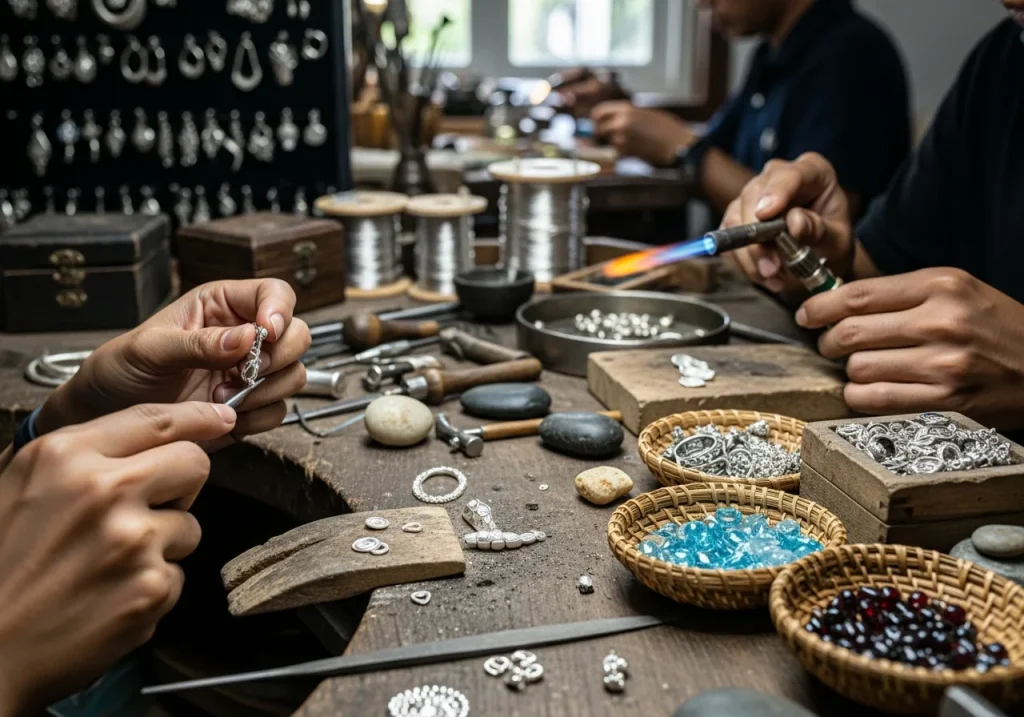
The global silver jewelry market is projected to reach USD 65.43 billion by 2035, growing at a CAGR of approximately 4.6% from 2026. Sterling silver (925) alone is valued at USD 16.96 billion in 2026, with a projected CAGR of 5.4% to 2035. Asia-Pacific accounts for over 40% of global consumption.
Bali Silver Jewelry Wholesale vs. Indonesian Reseller Platforms in 2027: A Cost and Trust Comparison for Retailers
In the dynamic global silver jewelry market, projected to reach USD 65.43 billion by 2035, the sterling silver segment alone is valued at USD 16.96 billion in 2026. Asia-Pacific drives over 40% of global consumption. Within this expanding landscape, Indonesia, particularly Bali, maintains a crucial artisanal export niche. As retailers worldwide seek reliable sourcing, understanding the differences between established B2B wholesalers like Bali Silver Jewelry Wholesale and emerging Indonesian reseller platforms is essential for securing Bali silver jewelry private label products.
This analysis focuses on the 2026–2027 period, providing a cost and trust comparison for trade buyers, importers, wholesalers, and retailers considering their supply chain options.
Understanding the Bali Silver Jewelry Market in 2027
The global silver jewelry market is experiencing robust growth, with fabrication exceeding 240 million ounces in 2023 and projected at 248.6 million ounces by 2026. This represents the highest demand in over a decade. The sterling silver jewelry segment, specifically, is growing at a CAGR of 5.4% from 2026–2035, reaching an estimated USD 27.23 billion by 2035.
Indonesia’s contribution to this market is characterised by cultural craftsmanship and heritage-based motifs, primarily from Bali and Yogyakarta. While large-scale industrial manufacturing is limited, Indonesia excels in handmade, artisanal export, with Bali being a prominent centre. The country’s tourist economy also generates demand for handcrafted sterling silver jewelry as souvenirs, complementing the growing urban youth market for affordable fashion silver jewelry.
The Bali wholesale export segment for silver jewelry is small but high-margin, growing in line with Asia-Pacific’s annual demand growth, which is over 4%. This growth is driven by the region’s increasing purchasing power and appreciation for handcrafted items, making Bali silver jewelry private label products an attractive offering for international retailers.
2027 Note on Market Dynamics:
By 2027, the emphasis on ethical sourcing and transparent supply chains is expected to intensify across the global jewelry industry. Retailers will increasingly prioritise suppliers who can demonstrate clear provenance, fair labor practices, and sustainable material sourcing, directly impacting the perceived value and trustworthiness of their Bali silver jewelry private label offerings.
Sourcing Channels: Direct Wholesale vs. Reseller Platforms
Retailers have two primary avenues for sourcing Bali silver jewelry: direct engagement with established B2B wholesalers or utilising Indonesian reseller platforms. Each channel presents distinct advantages and disadvantages concerning cost, trust, quality control, and intellectual property protection.
1. Established B2B Wholesalers (e.g., Bali Silver Jewelry Wholesale)
Direct B2B wholesalers operate with established export licenses, direct access to artisans, and often maintain their own production facilities or long-term partnerships with workshops. This model facilitates a streamlined supply chain.
Advantages:
- Direct Pricing: Wholesalers offer factory-direct or near-factory pricing by eliminating intermediaries. This results in lower unit costs for bulk orders, directly impacting retail margins for Bali silver jewelry private label products.
- Quality Control: Established wholesalers implement stringent, multi-stage quality control processes. This includes oversight from raw material acquisition (925 sterling silver purity verification) through design execution, finishing, and packaging. Direct control minimifies defects and ensures consistency.
- Trust and Reliability: Reputable wholesalers provide clear contractual agreements, adhere to international trade regulations, and have verifiable business histories. They offer reliable communication, consistent lead times, and transparent dispute resolution mechanisms. This fosters long-term business relationships.
- Customisation and Private Label: Wholesalers are equipped to handle custom designs and private label requirements, offering comprehensive services from CAD design and prototyping to mass production and branding. This is crucial for retailers developing unique Bali silver jewelry private label collections.
- Intellectual Property Protection: Direct engagement allows for clearer agreements regarding design ownership and exclusivity, safeguarding a retailer’s custom Bali silver jewelry private label designs from replication.
- Export Documentation and Logistics: Experienced wholesalers manage all necessary export documentation, customs clearances, and international shipping logistics, reducing administrative burdens and potential delays for buyers.
- After-Sales Support: Established businesses typically offer robust after-sales support, including handling returns, exchanges, or addressing quality concerns efficiently.
Disadvantages:
- Minimum Order Quantities (MOQs): Wholesalers typically enforce higher MOQs to justify production runs and offer competitive pricing. This may not suit smaller retailers or those testing new Bali silver jewelry private label lines.
- Initial Setup Time: Establishing a relationship with a new wholesaler can require time for due diligence, sample approval, and contract negotiation.
2. Indonesian Reseller Platforms (e.g., online marketplaces, agents)
Reseller platforms aggregate products from multiple small-scale artisans or individual sellers. They often operate as intermediaries, connecting buyers with diverse, smaller suppliers.
Advantages:
- Lower MOQs: Many resellers cater to smaller orders, providing flexibility for retailers who wish to purchase smaller quantities or experiment with diverse designs without significant upfront investment.
- Wider Design Variety: Platforms often feature a broader range of designs from numerous independent artisans, offering unique or niche Bali silver jewelry private label options.
- Ease of Discovery: These platforms simplify the discovery of new artisans and designs without extensive direct outreach.
Disadvantages:
- Higher Unit Costs: Resellers typically add their margin on top of the artisan’s price, leading to higher unit costs compared to direct wholesale. This impacts overall profitability for Bali silver jewelry private label products.
- Inconsistent Quality Control: Quality control can be inconsistent across different sellers on a platform. Standards may vary, leading to discrepancies in product quality, materials, and finishing.
- Trust and Reliability Issues: Verifying the credibility and reliability of individual sellers on a platform can be challenging. Issues may arise with communication, adherence to timelines, product descriptions, and dispute resolution.
- Limited Customisation and Private Label Support: While some sellers may offer customisation, comprehensive private label services (design, branding, packaging consistency) are often less robust or unavailable compared to dedicated wholesalers.
- Intellectual Property Risks: Design protection can be more complex on platforms where multiple sellers might offer similar designs, increasing the risk of replication for Bali silver jewelry private label designs.
- Logistical Complexities: Buyers may need to manage multiple shipments from different sellers or deal with varied shipping policies and documentation from individual artisans.
- Limited After-Sales Support: After-sales service can be fragmented or dependent on individual seller policies, which may be less comprehensive than a dedicated wholesaler’s.
Cost and Trust Comparison Summary (2027)
The following table provides a concise comparison for retailers considering their Bali silver jewelry private label sourcing strategy in 2027:
| Feature | Established B2B Wholesaler | Indonesian Reseller Platform |
|---|---|---|
| Unit Cost (Bulk) | Lower (factory-direct or near-factory) | Higher (reseller margin added) |
| Quality Control | Stringent, consistent, multi-stage | Inconsistent, variable across sellers |
| Trust & Reliability | High (contractual, verifiable history) | Variable (dependent on individual seller) |
| MOQs | Typically higher | Typically lower/flexible |
| Customisation / Private Label | Comprehensive (design to branding) | Limited or inconsistent |
| IP Protection | Stronger (clear agreements) | Weaker (risk of replication) |
| Logistics & Documentation | Managed by wholesaler | Can be complex, buyer may manage |
| After-Sales Support | Robust and consistent | Variable, dependent on seller |
| Lead Time Consistency | Predictable, reliable | Can be unpredictable |
Making an Informed Decision for Your Bali Silver Jewelry Private Label
For retailers seeking to build a sustainable, high-quality Bali silver jewelry private label brand, direct engagement with an established B2B wholesaler like Bali Silver Jewelry Wholesale offers significant advantages in cost, consistency, and trust. While reseller platforms provide flexibility for smaller orders or diverse product discovery, the potential for inconsistent quality, higher long-term costs, and limited support for customisation and IP protection makes them less ideal for scalable, brand-focused operations.
By prioritising direct relationships with reputable B2B partners, retailers can secure competitive pricing, ensure product integrity, and confidently develop their unique Bali silver jewelry private label collections for the growing global market.
For further information on wholesale Bali silver jewelry and private label services, request a wholesale quote on WhatsApp.