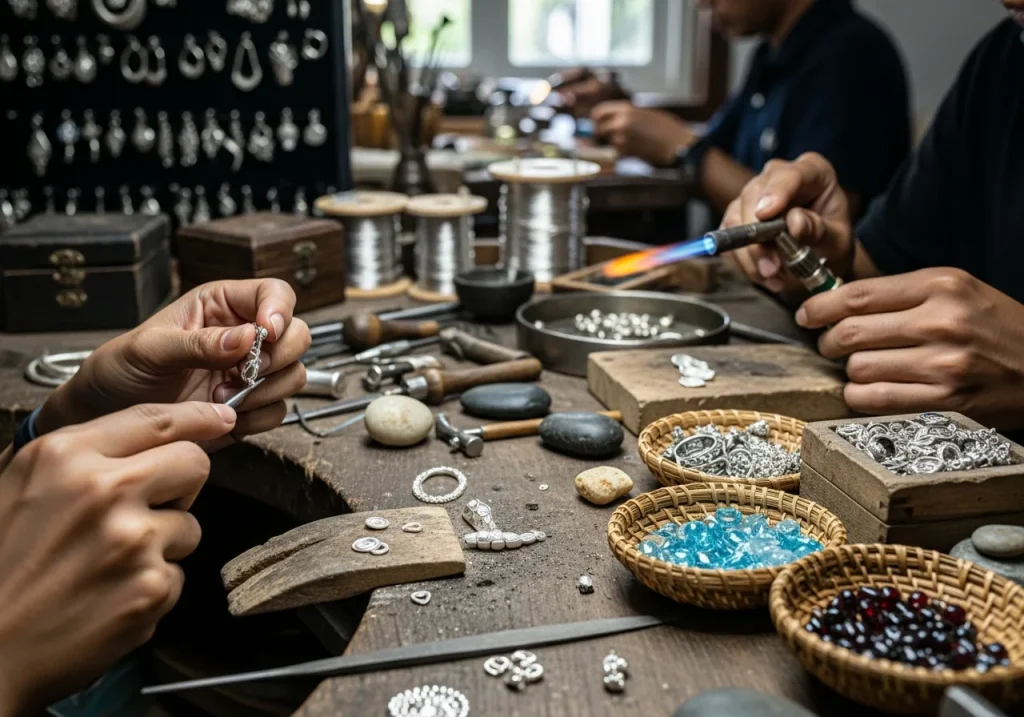
The global silver jewelry market, valued at USD 43.76 billion in 2026, is projected to reach USD 65.43 billion by 2035, growing at a CAGR of approximately 4.6%. Asia-Pacific leads consumption, accounting for over 40% of the market. Indonesia, particularly Bali, maintains a small but export-oriented niche focused on cultural craftsmanship and handmade sterling silver jewelry.
Buyer’s Checklist: 7 Must-Ask Questions Before Ordering Bali Sterling Silver Wholesale
As a senior content lead for Bali Silver Jewelry Wholesale, I understand the considerations for importers, wholesalers, retailers, and interior contractors when sourcing sterling silver jewelry. Bali and Yogyakarta are key artisanal centres within Indonesia’s silver jewelry market, which emphasises cultural craftsmanship and heritage-based motifs. While large-scale industrial manufacturing is limited in Indonesia, its strength lies in its handmade, artisanal export niche, particularly from Bali. This segment is growing, aligning with Asia-Pacific’s demand growth, which exceeds 4% annually.
The global sterling silver jewelry segment alone is valued at USD 16.96 billion in 2026 and is projected to reach USD 27.23 billion by 2035, with a CAGR of 5.4%. For those looking to capitalise on this growth, especially within the high-margin artisanal segment, a structured approach to supplier evaluation is essential. Here are seven crucial questions to ask before placing a wholesale order for Bali sterling silver.
1. What are your material sourcing and purity verification processes?
Understanding the origin and purity of the silver is paramount. Sterling silver, by definition, is 92.5% pure silver and 7.5% other metals, typically copper. Reliable suppliers will have clear documentation regarding their silver source and methods for verifying its purity. This might include X-ray fluorescence (XRF) testing results or certifications from independent laboratories. For buyers, ensuring the silver meets international standards (e.g., 925 hallmarks) is critical for resale integrity and compliance. Ask about their internal quality control for raw materials and how they handle discrepancies.
2. Can you provide detailed information on your manufacturing capabilities and lead times?
Bali’s strength is its handmade artisanal production. However, even with artisanal methods, suppliers should have a structured production process. Inquire about their capacity for your order volume, typical lead times for various product types, and how they manage production schedules. For large orders, understanding if they can scale without compromising quality or delivery timelines is vital. Discuss potential bottlenecks, such as intricate designs requiring extensive handwork, and how these are managed to meet deadlines. Clarity on lead times helps with inventory planning and managing customer expectations.
3. What are your minimum order quantity (MOQ) requirements and pricing tiers?
MOQs vary significantly among wholesale suppliers. Some specialise in smaller, custom batches, while others cater to larger volumes. Understand their MOQs per design or per total order value. Furthermore, inquire about their pricing structure. Do they offer tiered pricing based on order volume? Are there discounts for repeat orders or long-term partnerships? A transparent pricing model allows you to calculate your margins accurately and plan your purchasing strategy effectively.
4. What quality control measures are in place throughout production and before shipment?
Quality control is non-negotiable for handmade items. Ask about the specific checkpoints in their production process where quality is inspected. This could include checks after casting, during filing and sanding, before stone setting, and a final inspection prior to packaging. Inquire about their defect rate tolerance and how they handle rejected items. A robust QC process ensures that the products you receive meet your standards and those of your customers, reducing returns and maintaining your brand’s reputation.
5. How do you handle custom designs or modifications to existing pieces?
Many buyers seek unique designs to differentiate their offerings. If you require custom designs or modifications to a supplier’s existing catalogue, clarify their capabilities and process. This includes their design brief requirements, prototyping procedures, sample approval processes, and associated costs. Understand their intellectual property (IP) policy for custom designs to protect your proprietary creations. A supplier adept at custom work can be a valuable partner for developing exclusive product lines.
6. What are your packaging, shipping, and insurance policies for international orders?
For international trade, efficient and secure logistics are crucial. Discuss their standard packaging methods to prevent damage during transit. Inquire about their preferred shipping carriers, estimated transit times to your region, and available shipping options (e.g., air freight, sea freight). Crucially, understand their insurance policy for goods in transit. Who is responsible for damage or loss during shipping? Clarify Incoterms (e.g., FOB, CIF) to define responsibilities and costs. Proper packaging and reliable shipping minimise risks and ensure your products arrive safely.
7. What are your payment terms and return/exchange policies?
Clear payment terms are essential for a smooth business relationship. Discuss deposit requirements, payment schedules (e.g., balance due upon shipment), and accepted payment methods (e.g., bank transfer, credit card, escrow services). Furthermore, understand their policy on returns or exchanges for defective or non-conforming goods. What is the timeframe for reporting issues? How are returns processed, and who covers the associated costs? A transparent policy provides security and recourse in case of product issues.
2027 Note
As the global silver jewelry market continues its robust growth, with fabrication exceeding 240 million ounces in 2023 and projected at 248.6 million ounces by 2026, demand is expected to remain strong into 2027. The sterling silver segment, in particular, is forecast to maintain a CAGR of 5.4% from 2026-2035, reaching USD 27.23 billion by 2035. This sustained growth underlines the importance of securing reliable wholesale partnerships for Bali silver jewelry for resale, ensuring consistent supply and quality amidst rising demand.
Summary Checklist for Bali Silver Jewelry Wholesale
| Question Category | Key Considerations |
|---|---|
| Material Sourcing & Purity | Origin, 925 hallmark, XRF testing, internal QC |
| Manufacturing & Lead Times | Capacity, production schedule, typical lead times, scalability |
| MOQ & Pricing | Per design/order MOQs, tiered pricing, volume discounts |
| Quality Control | Inspection checkpoints, defect tolerance, handling rejects |
| Customisation | Design brief, prototyping, sample approval, IP policy |
| Logistics | Packaging, shipping carriers, transit times, insurance, Incoterms |
| Payment & Returns | Payment terms, methods, return/exchange policy, defect reporting |
By asking these seven questions, you can thoroughly vet potential suppliers for Bali silver jewelry wholesale, ensuring a partnership that aligns with your business objectives and quality standards. This due diligence is crucial for sourcing high-quality, authentic products for resale in a competitive and growing market.
2. Sterling Silver Purity and Hallmarking Standards
Understanding sterling silver purity and hallmarking is crucial for wholesale buyers. Sterling silver, by definition, comprises 92.5% pure silver and 7.5% other metals, typically copper. This alloy provides durability and strength, making it suitable for intricate jewelry designs while retaining the luster of silver. The remaining 7.5% of metals enhance the silver’s structural integrity, preventing it from being too soft for daily wear.
International standards dictate that items marketed as sterling silver must meet this 92.5% purity threshold. Reputable manufacturers apply a hallmark to their sterling silver products to certify this purity. The most common hallmark is ‘925’, indicating 925 parts per thousand of pure silver. Other variations may include ‘.925’ or ‘Sterling’. For buyers, verifying these hallmarks is a primary step in ensuring product authenticity and compliance with international trade regulations. Absence of a hallmark should prompt further inquiry regarding the silver’s composition.
| Hallmark | Purity | Description |
|---|---|---|
| 925 | 92.5% Silver | Standard for sterling silver |
| .925 | 92.5% Silver | Alternative numerical marking |
| Sterling | 92.5% Silver | Word mark for sterling silver |
3. Supply Chain Transparency and Ethical Sourcing
For wholesale buyers, supply chain transparency and ethical sourcing are increasingly important considerations. This involves understanding the origin of raw materials, the conditions under which the jewelry is produced, and the environmental impact of manufacturing processes. In Bali, where artisanal production is prominent, verifying these aspects can provide assurance regarding the integrity of your supply chain.
Ethical sourcing in Bali’s silver jewelry sector typically focuses on fair labor practices, safe working conditions, and responsible waste management. Buyers should inquire about the workshops’ adherence to local labor laws, including fair wages and reasonable working hours. Transparency extends to the origin of silver, ensuring it is sourced from legitimate channels and not associated with unethical mining practices. For a small, artisanal export niche like Bali, establishing direct relationships with producers often facilitates greater transparency and allows for firsthand verification of ethical standards.
- Verification of labor practices: Fair wages, working hours, safety standards.
- Material origin: Assurance of legitimate and responsibly sourced silver.
- Environmental considerations: Waste management, use of non-toxic chemicals.
- Artisan welfare: Support for traditional skills and community impact.
For further discussion on your specific wholesale requirements or to explore our collections, please request a wholesale quote on WhatsApp.